.png)

Why the Process Matters as Much as the Design
Most people planning a custom home have never built one before. The process is not something that comes with a clear manual — and the builders who benefit most from that confusion are the ones who keep it that way.
A custom home is not just a design challenge. It is a coordination challenge. The lot, the design, the budget, the permits, and the construction all have to move together — and when they are managed by separate firms, the gaps between them are where most problems start.
One Contract, One Team
We handle architectural design, selections, permitting, and construction under one contract. The person who designed the home is accountable for building it — and the decisions made early in design are fully reflected in what gets built.
A Fixed-Price Structure
The construction price is set before permits are pulled. Design and pricing are developed together, so the home that gets drawn is one that can actually be built within the client's budget — not estimated loosely and adjusted after the fact.
The Site Comes First
Every part of the process starts with the property. The lot shapes the design, the design shapes the permit, and the permit shapes the schedule. Understanding the site before any other decisions are made is the single most important thing we do at the beginning of every project.
An Accessible Team Throughout
Clients work with Tim, Laura, and Christian throughout the process — not handed off to a project coordinator after signing. The same people who walked the lot with you are the ones building the home.
How Long Does the Process Take?
Our typical full process is 12 to 14 months from first consultation to move-in, with construction often taking about 9 months after permits are approved.
PhaseTypical DurationInitial consultation and site evaluation2–4 weeksDesign and pricing development6–10 weeksPermitting and selections8–14 weeks (varies by county)Construction~9 months after permitsFinal walkthrough and handoff1–2 weeksTotal typical process12–14 months
More complex sites, waterfront properties, and projects with Critical Area review in Anne Arundel County or detailed permitting in Montgomery County can extend the pre-construction phase. The most accurate timeline for any project starts with the site evaluation.
The Whitehall Design+Build Process
Every project moves through the same structure. What changes between projects is how the site, the county, and the program shape each stage.
1. Initial Consultation
Start with the property, the budget, your goals, and the kind of home you want to build. Even if you don't have land yet, this conversation helps clarify what kind of lot to look for, what program is realistic at a given budget, and what the process will involve before any commitments are made.
2. Site Evaluation and Land Search
We evaluate the property — or help identify one — before any design work begins. The site evaluation covers build feasibility, grading and drainage conditions, utility access, setback and lot coverage requirements, and county-specific permit considerations. In Anne Arundel County, this includes an assessment of Chesapeake Bay Critical Area applicability. In Montgomery County, it includes zoning classification, impervious surface limits, and environmental buffer review. This is where the most important early budget decisions get made.
3. Design and Pricing
Architecture and construction pricing are developed together — not sequentially. The design responds to the site and the budget simultaneously, so the home that gets drawn is one that can actually be built at the number the client has planned for. By the end of this phase, the design is complete and the price is fixed.
4. Permitting
We manage the full permit submission and approval process. Permit requirements vary significantly by county and by site — we handle all submissions, respond to agency comments, and manage the approval timeline as part of the Design+Build contract. Permit timelines are the variable most outside our direct control, which is why we evaluate the site and understand the permit scope before committing to a schedule.
5. Curated Selections
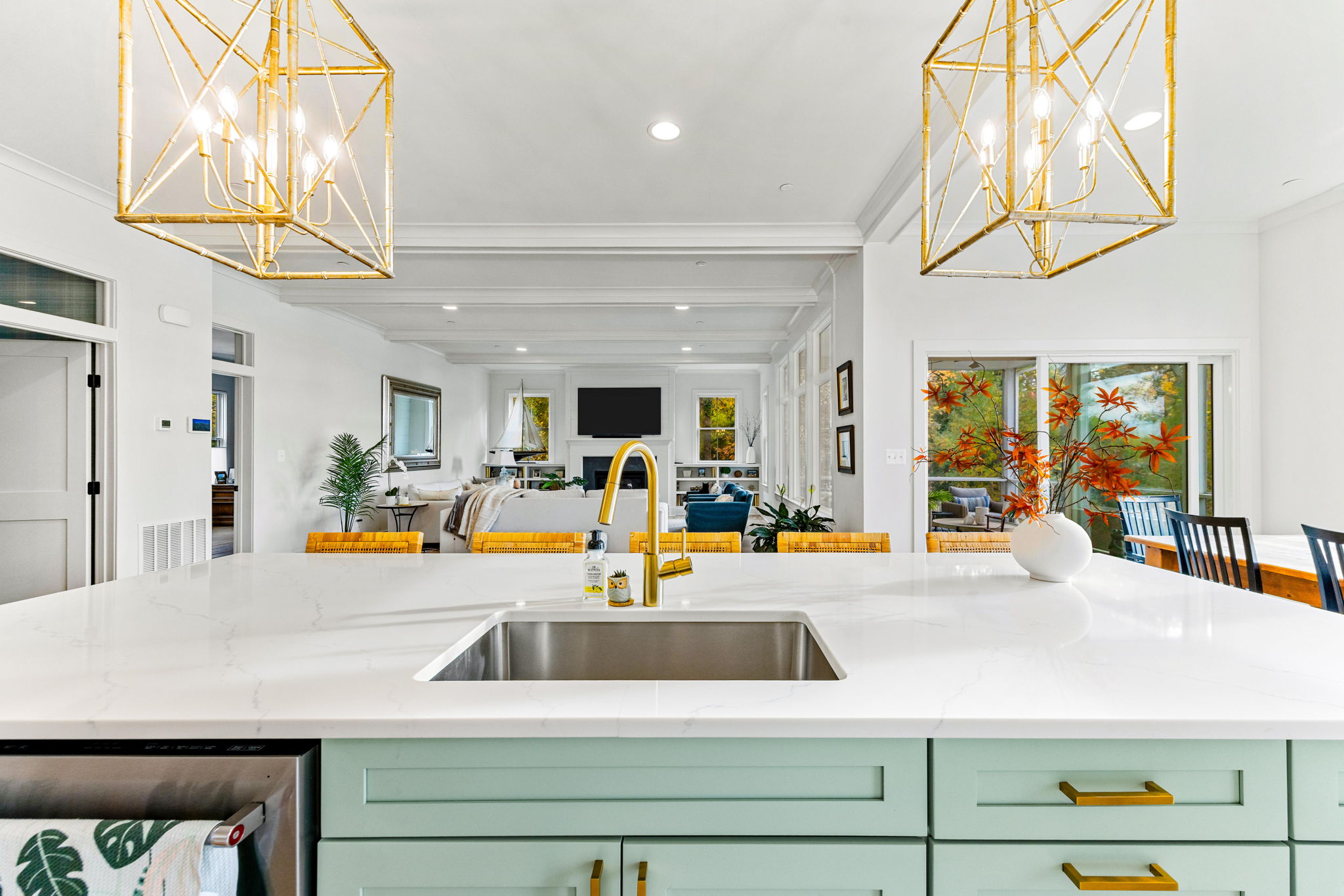
Finish selections are made during the permitting phase — keeping the project on schedule without rushing important decisions. We guide clients through elevated, curated options across flooring, cabinetry, countertops, plumbing fixtures, tile, lighting, and exterior materials. By the time permits are approved, selections are finalized and material lead times are already accounted for.
6. Construction
Build with a defined schedule, a dedicated team, and regular communication throughout. The same team that managed the design and permitting phases oversees construction — so the accountability is continuous, not transferred. Construction typically takes about 9 months after permits are approved.
7. Final Walkthrough and Handoff
Complete the final walkthrough and deliver the home with a zero-item punch list — meaning the home is finished before the keys are handed over. We also walk through all systems, appliances, and maintenance considerations so you understand how everything in the home operates from day one.
How Maryland's Counties Shape the Process
The Design+Build process is the same across all our projects. What changes is how the site evaluation and permitting phases play out — and that varies significantly by county.
Anne Arundel County
Anne Arundel's most significant process variable is the Chesapeake Bay Critical Area. Properties within 1,000 feet of tidal waters require a more involved pre-construction review covering setbacks, lot coverage, stormwater management, and vegetation clearing. We evaluate Critical Area applicability as the very first step on any Anne Arundel site.
Montgomery County
Montgomery County's permitting process requires thorough documentation from the start — site plans, grading plans, utility coordination, and in some cases environmental review. The documentation requirements are more detailed than in many other Maryland jurisdictions, which is why the permit phase often takes longer here. We build that timeline into the project schedule from the beginning.
Waterfront Properties — Any County
Waterfront and water-adjacent sites carry the most complex pre-construction requirements regardless of county. Tidal soil conditions, stormwater planning, structural engineering for water proximity, and regulatory review all require more coordination than inland sites. The process is the same — the pre-construction phase simply carries more weight.