.png)

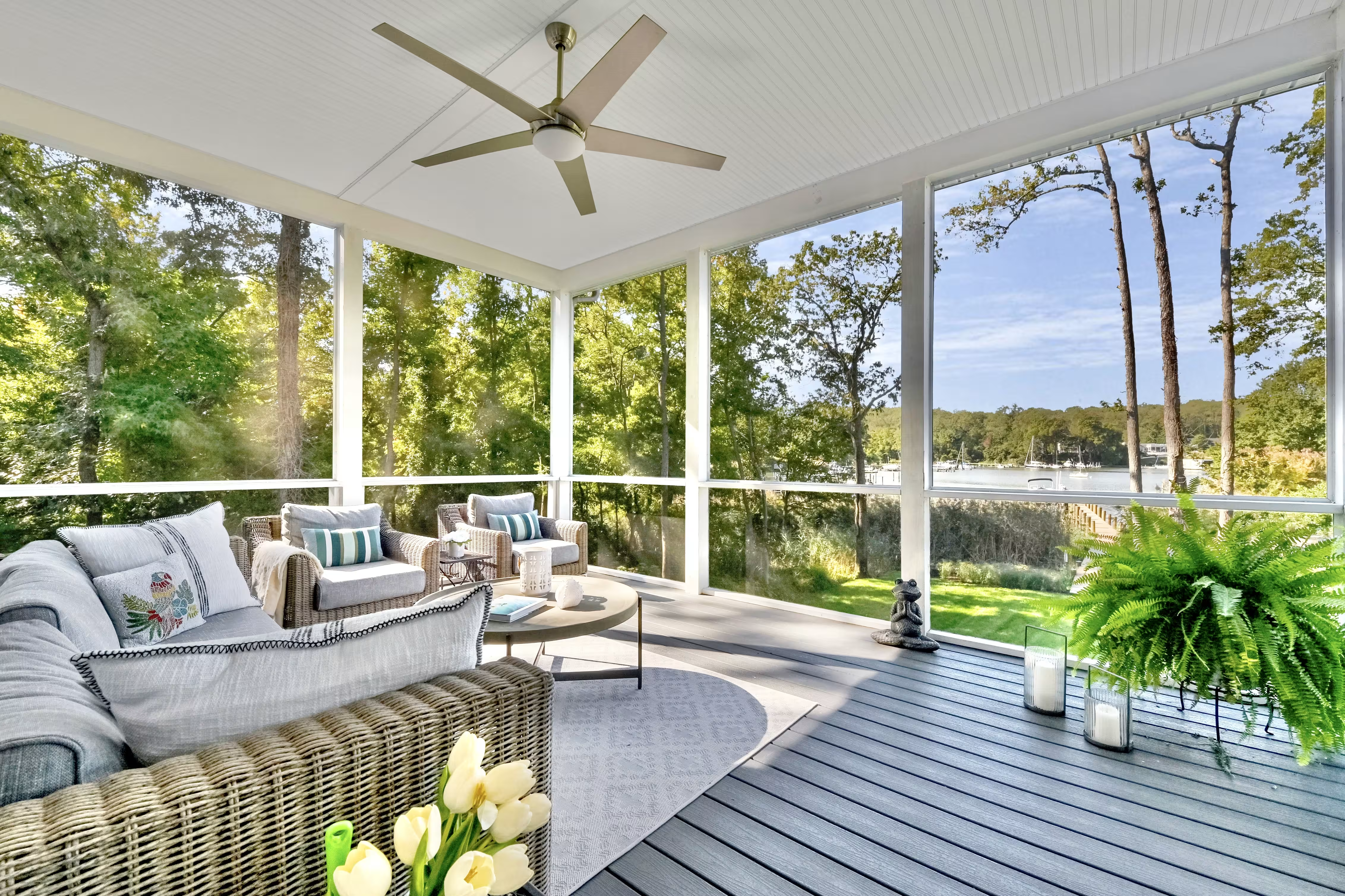
Building a custom home on the water in Maryland sounds like a dream, and for the right client with the right builder, it absolutely is. But if you have started researching the process, you have probably already sensed that waterfront construction is not the same as building anywhere else. The sites are more sensitive, the regulations are more layered, and the materials and structural decisions carry consequences that standard builds simply do not face.
New construction waterfront Maryland complexity is real, and it is not something to minimize. The good news is that working with a builder who specializes in these projects makes the complexity manageable. Whitehall Building & Company builds waterfront homes across Maryland, including in Annapolis and the communities of Anne Arundel County, and this guide walks through exactly what makes waterfront construction different and what you should understand before you begin.
Maryland's Waterfront Regulatory Environment Is Unlike Anything Else
The single biggest factor that sets waterfront construction apart from standard residential building is the regulatory layer. In Maryland, waterfront properties near the Chesapeake Bay, its tributaries, and other tidal and non-tidal wetlands fall under the jurisdiction of Maryland's Critical Area Law. This state law governs development within 1,000 feet of tidal waters and wetlands, and it establishes buffer zones, impervious surface limitations, and habitat protection requirements that directly shape what you can build and how.
Beyond the Critical Area, many waterfront projects require review by the Maryland Department of the Environment for stormwater management and wetland impacts. Local county and municipal permits layer on top of state requirements. In Anne Arundel County, where Annapolis sits, waterfront projects often involve multiple agencies reviewing the same application from different angles. A builder who has navigated this system repeatedly knows how to sequence submissions, what each reviewer is looking for, and how to keep a project moving without preventable delays.
Whitehall manages the full permitting process for every waterfront project, including Critical Area reviews, environmental submissions, and local approvals. The experience is built in.
Structural Demands Are Fundamentally Different on the Water
Waterfront sites in Maryland place demands on a structure that inland homes simply do not face. Exposure to moisture, humidity, wind, and in tidal areas, salt air accelerates deterioration in materials that perform perfectly well elsewhere. A home built on the Chesapeake Bay shoreline or along one of the Potomac River's waterfront communities needs to be engineered for its environment, not just designed to look beautiful in it.
Foundation design is the first consideration. Many waterfront lots have saturated soils, high water tables, or terrain that slopes toward the water. The foundation approach needs to account for all of this, and the decision has long-term consequences for structural stability and moisture management. Framing and exterior systems also need to be specified with durability in mind. Whitehall carefully selects materials suited to waterfront conditions on every project, choosing products that balance long-term performance with the refined design that these exceptional sites deserve.
Site Planning and Orientation Make or Break a Waterfront Home
One of the most consequential decisions in any waterfront build is how the home sits on its lot. Orientation affects everything: how sunlight moves through the interior, how the home relates to the water view, how wind exposure is managed, and how outdoor living spaces connect to the shoreline. A well-sited waterfront home feels like it belongs there. A poorly sited one wastes the most valuable asset the lot has.
New construction waterfront Maryland complexity extends to site planning in ways that first-time builders may not anticipate. Buffer zones required by the Critical Area Law often limit how close structures can be placed to the water's edge, and those restrictions shape the footprint and orientation from the start. Grading and drainage must be designed to direct stormwater away from both the structure and the shoreline. Whitehall's project team reviews every waterfront site for these factors before design begins so the layout of your home works with the land and with the regulatory framework, not against either.
Permitting and Environmental Review: What Takes the Most Time
If you are planning a waterfront build and working with a timeline, the permitting and environmental review phase is where you need the most patience and the most experienced guidance. Critical Area applications, wetland delineations, stormwater management plans, and grading permits can involve parallel review tracks that take months to clear. An incomplete or poorly prepared submission can trigger comment cycles that add significant time to the pre-construction phase.
According to the Maryland Department of Planning, the Critical Area program was established specifically to protect the Chesapeake Bay and its tributaries from the impacts of shoreline development. That mission is important, and it means the review process is thorough by design. Whitehall's experience with this process means submissions are prepared completely from the start, comments are addressed efficiently, and projects are not stalled by avoidable missteps in the application phase.
To understand the full scope of what goes into a waterfront build, explore Whitehall's waterfront construction services and see how each phase of the process is structured.
What the Right Builder Does Differently on a Waterfront Project
Waterfront construction rewards builders who plan ahead and penalizes those who do not. The margin for error is smaller, the consequences of coordination failures are larger, and the decisions made early in the process have downstream effects that compound throughout the build. This is not the type of project where a builder can figure it out as they go.
Whitehall approaches every waterfront project with a dedicated project manager who stays with the build from initial consultation through final walkthrough. Clients receive regular updates at every phase so they know exactly where the project stands and what is coming next. When something affects the schedule or the budget, it is addressed directly and promptly, not buried until the next invoice arrives. The National Association of Home Builders consistently identifies communication and project management as the top factors in client satisfaction on complex custom builds, and waterfront projects raise the stakes on both.
Whitehall keeps clients informed through every phase of their waterfront build because that is how projects of this complexity are done well.
Start Your Waterfront Build With a Team That Knows Maryland's Shoreline
Building a waterfront home in Maryland is a significant undertaking, and new construction waterfront Maryland complexity should be matched with an equally serious approach. The right builder brings local regulatory knowledge, waterfront-specific construction experience, and the communication discipline to keep you informed and confident from the first conversation to the final walkthrough.
If you are ready to explore a waterfront build in Annapolis, along the Potomac, or anywhere in Maryland's waterfront communities, connect with the Whitehall team and let's start with a straightforward conversation about your site, your vision, and how we build homes that belong on the water.